
UX Design
UX Design
Wellness App Design
Wellness App Design
Luna is an app-connected lamp that focuses on improving the user's well-being through sleep.
Luna is an app-connected lamp that focuses on improving the user's well-being through sleep.


4 months
2025
Figma
4 months
2025
Figma
Challenge
The foundation of overall well-being starts with quality sleep, yet many people struggle to build and maintain consistent bedtime routines. Existing solutions often focus on either habit tracking or environmental factors, but rarely both leaving a gap in how users prepare their minds and bodies for rest in a holistic, effortless way.
Results
Luna is an app-connected lamp designed to support better sleep through the combination of guided routines and circadian lighting. Users can create and track personalized nighttime rituals while the lamp gradually adjusts lighting to align with the body’s natural rhythms.
By blending behavioral structure with environmental cues, Luna helps users wind down more effectively making it easier to build sustainable habits and create a more consistent, restorative sleep experience.
Challenge
The foundation of overall well-being starts with quality sleep, yet many people struggle to build and maintain consistent bedtime routines. Existing solutions often focus on either habit tracking or environmental factors, but rarely both leaving a gap in how users prepare their minds and bodies for rest in a holistic, effortless way.
Results
Luna is an app-connected lamp designed to support better sleep through the combination of guided routines and circadian lighting. Users can create and track personalized nighttime rituals while the lamp gradually adjusts lighting to align with the body’s natural rhythms.
By blending behavioral structure with environmental cues, Luna helps users wind down more effectively making it easier to build sustainable habits and create a more consistent, restorative sleep experience.
Discovery
Discovery
Sleep struggles are deeply personal, yet incredibly common. While people understand the importance of rest, they often lack the structure and environmental support needed to consistently wind down. Existing solutions tend to isolate either habit tracking or sleep environments, creating fragmented experiences that don’t fully support the transition to sleep. This revealed an opportunity to design a more holistic solution—one that supports both behavioral and environmental cues, helping users prepare for rest in a more natural, intuitive way.
Sleep struggles are deeply personal, yet incredibly common. While people understand the importance of rest, they often lack the structure and environmental support needed to consistently wind down. Existing solutions tend to isolate either habit tracking or sleep environments, creating fragmented experiences that don’t fully support the transition to sleep. This revealed an opportunity to design a more holistic solution—one that supports both behavioral and environmental cues, helping users prepare for rest in a more natural, intuitive way.
Interviews
Interviews
Through personal reflection and research into sleep habits, it became clear that inconsistency is one of the biggest barriers to quality sleep. Many users experiment with different techniques, but struggle to maintain routines that actually stick. Initial insights pointed to two key factors that consistently improve sleep: structured nighttime routines and environmental cues like lighting. Further research validated that combining these elements could create a more effective and sustainable solution.
Through personal reflection and research into sleep habits, it became clear that inconsistency is one of the biggest barriers to quality sleep. Many users experiment with different techniques, but struggle to maintain routines that actually stick. Initial insights pointed to two key factors that consistently improve sleep: structured nighttime routines and environmental cues like lighting. Further research validated that combining these elements could create a more effective and sustainable solution.
A consistent routine paired with the right environment can significantly improve both the ability to fall asleep and the quality of rest.
A consistent routine paired with the right environment can significantly improve both the ability to fall asleep and the quality of rest.
Over half of our interviewees admitted to not being able to understand their water bills.
A consistent routine paired with the right environment can significantly improve both the ability to fall asleep and the quality of rest.
Goals
Goals
Help users build and maintain a consistent bedtime routine.
Support the body’s natural sleep cycle through circadian lighting.
Create a calming, low-effort experience that encourages users to wind down each night.
Keep users informed of water usage in real-time.
Raise awareness of usage habits for individuals within the household.
Share data in a way all members of the household can understand (not just your dad).
Help users build and maintain a consistent bedtime routine.
Support the body’s natural sleep cycle through circadian lighting.
Create a calming, low-effort experience that encourages users to wind down each night.
Information Design
Information Design
The app needs to support an editable schedule with timed tasks that users can easily adjust when plans change, ensuring the routine remains flexible and realistic. It also requires clear, structured steps that guide users through their wind-down process without adding complexity, along with circadian lighting cues that gradually shift brightness and color to reinforce natural sleep rhythms. Together, this information system reduces cognitive load by combining adaptable planning with simple, consistent guidance that helps users maintain healthier sleep habits over time.
The app needs to support an editable schedule with timed tasks that users can easily adjust when plans change, ensuring the routine remains flexible and realistic. It also requires clear, structured steps that guide users through their wind-down process without adding complexity, along with circadian lighting cues that gradually shift brightness and color to reinforce natural sleep rhythms. Together, this information system reduces cognitive load by combining adaptable planning with simple, consistent guidance that helps users maintain healthier sleep habits over time.
Planning & App Structure
Planning & App Structure
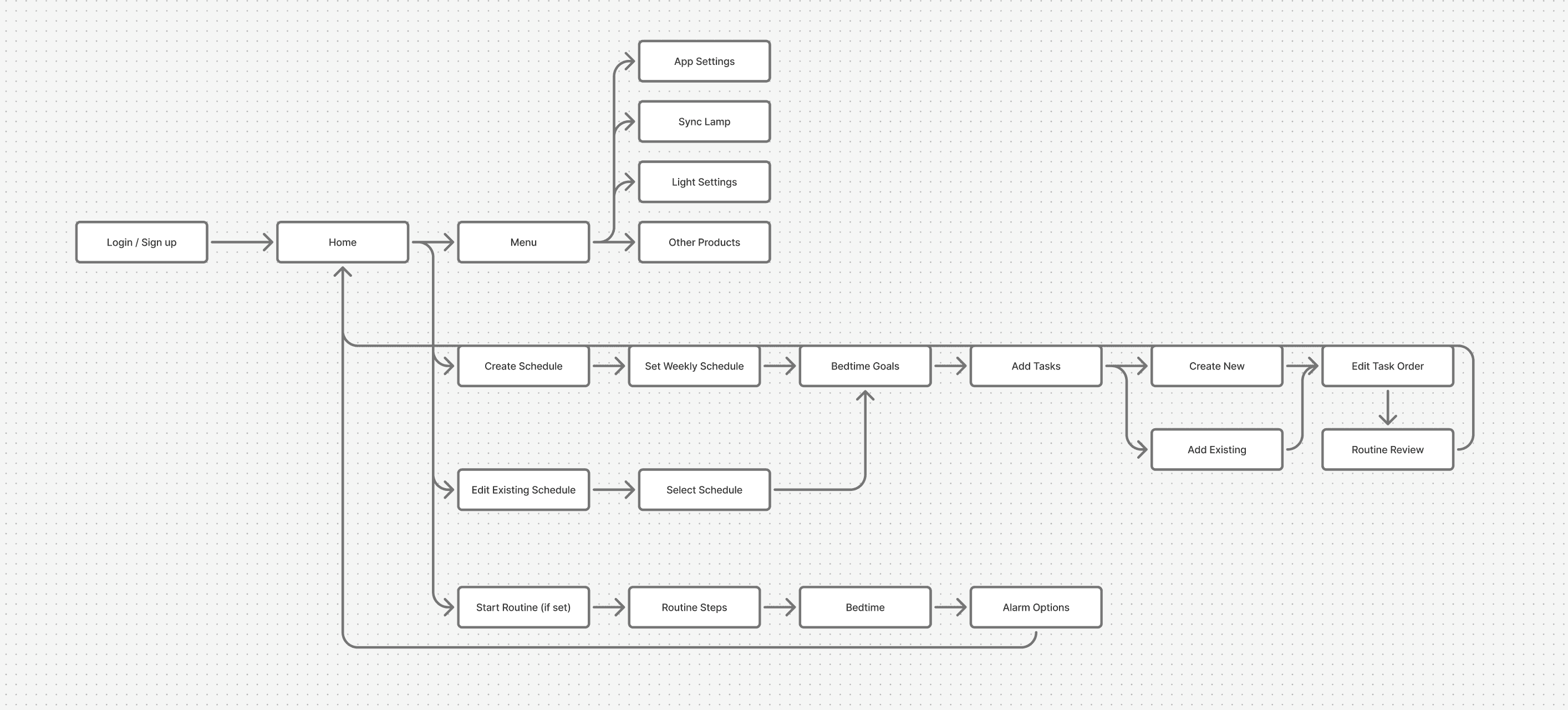
With the core interaction defined, the focus shifted to how the app behaves across moments of use.
The key actions included syncing the lamp and creating the bedtime routine.
With the core interaction defined, the focus shifted to how the app behaves across moments of use.
The key actions included syncing the lamp and creating the bedtime routine.
Shaping the Experience
Shaping the Experience
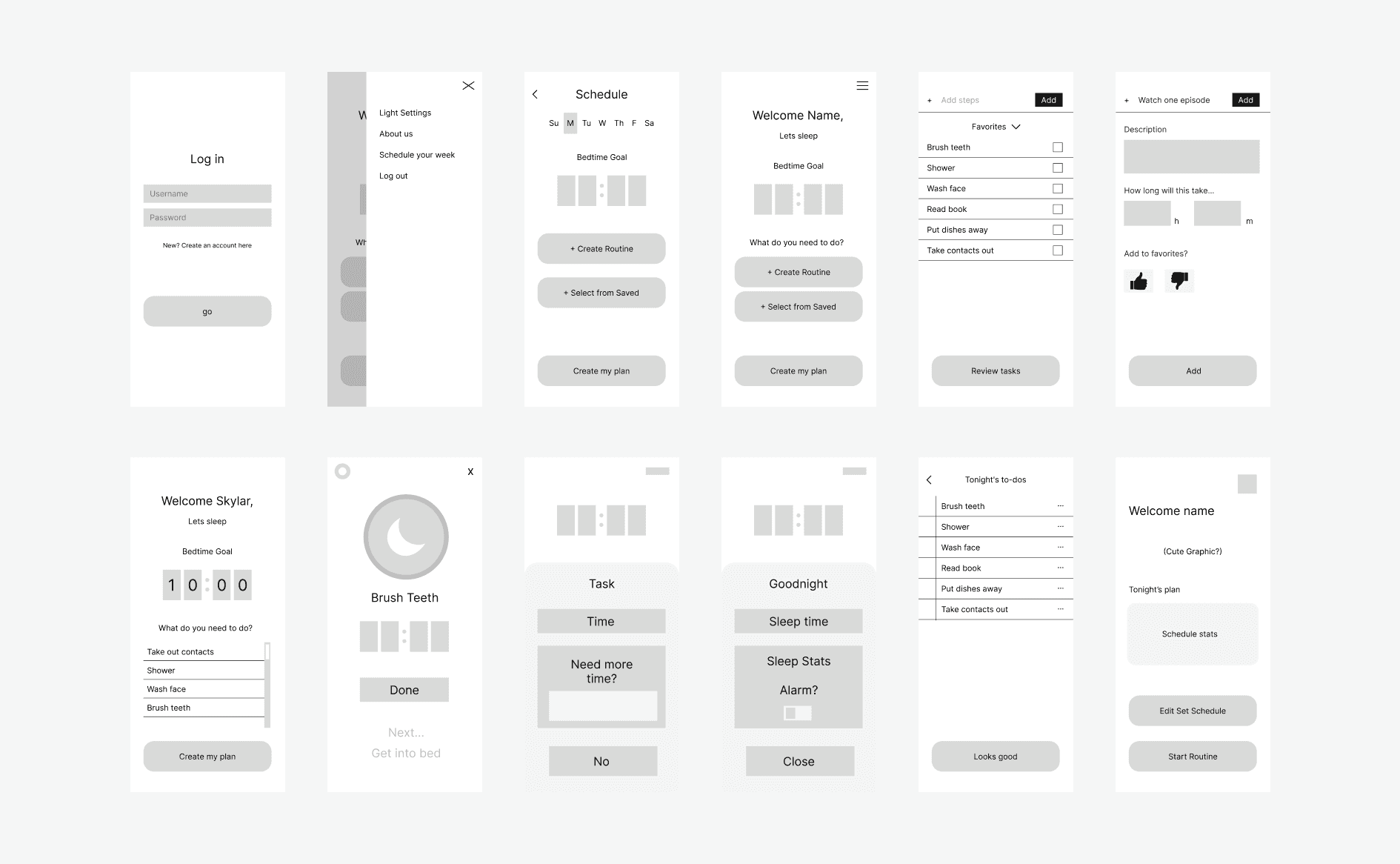
After setting up the user flow to meet my requirements, I was able to move onto wire-framing. My goal here was to make sure I included all the information required to meet the user needs and present it in a way that wasn't too overwhelming to avoid overstimulation during a time users should be winding down.
After setting up the user flow to meet my requirements, I was able to move onto wire-framing. My goal here was to make sure I included all the information required to meet the user needs and present it in a way that wasn't too overwhelming to avoid overstimulation during a time users should be winding down.
Wireframes
Wireframes
Early wireframes focused on structuring information and defining how users would move through core tasks. Iterating at this stage made it easier to refine usability before committing to higher-fidelity design.
Early wireframes focused on structuring information and defining how users would move through core tasks. Iterating at this stage made it easier to refine usability before committing to higher-fidelity design.
UI
UI
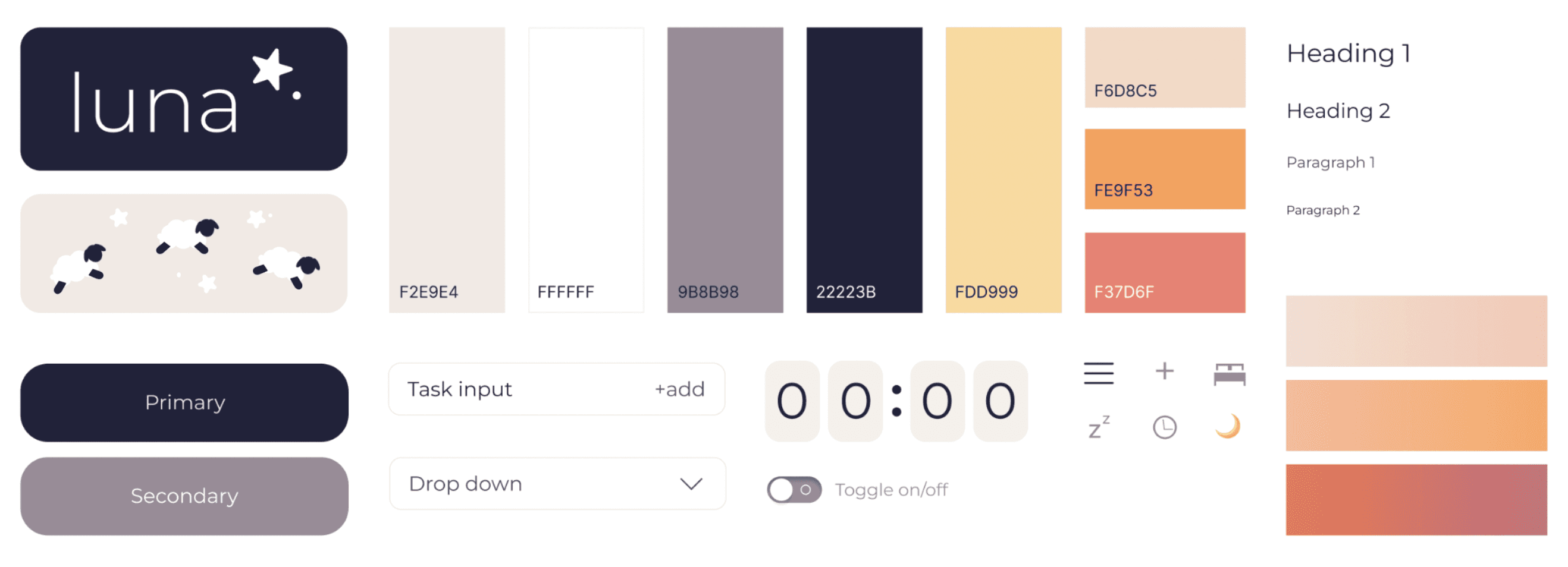
After finalizing wireframes and making sure all the requirements were met from user testing, I moved on to creating a design system as well as a clickable prototype. My goal was to design a bright, colorful interface that would keep everyone in the family engaged while still highlighting the water usage data.
After finalizing wireframes and making sure all the requirements were met from user testing, I moved on to creating a design system as well as a clickable prototype. My goal was to design a bright, colorful interface that would keep everyone in the family engaged while still highlighting the water usage data.
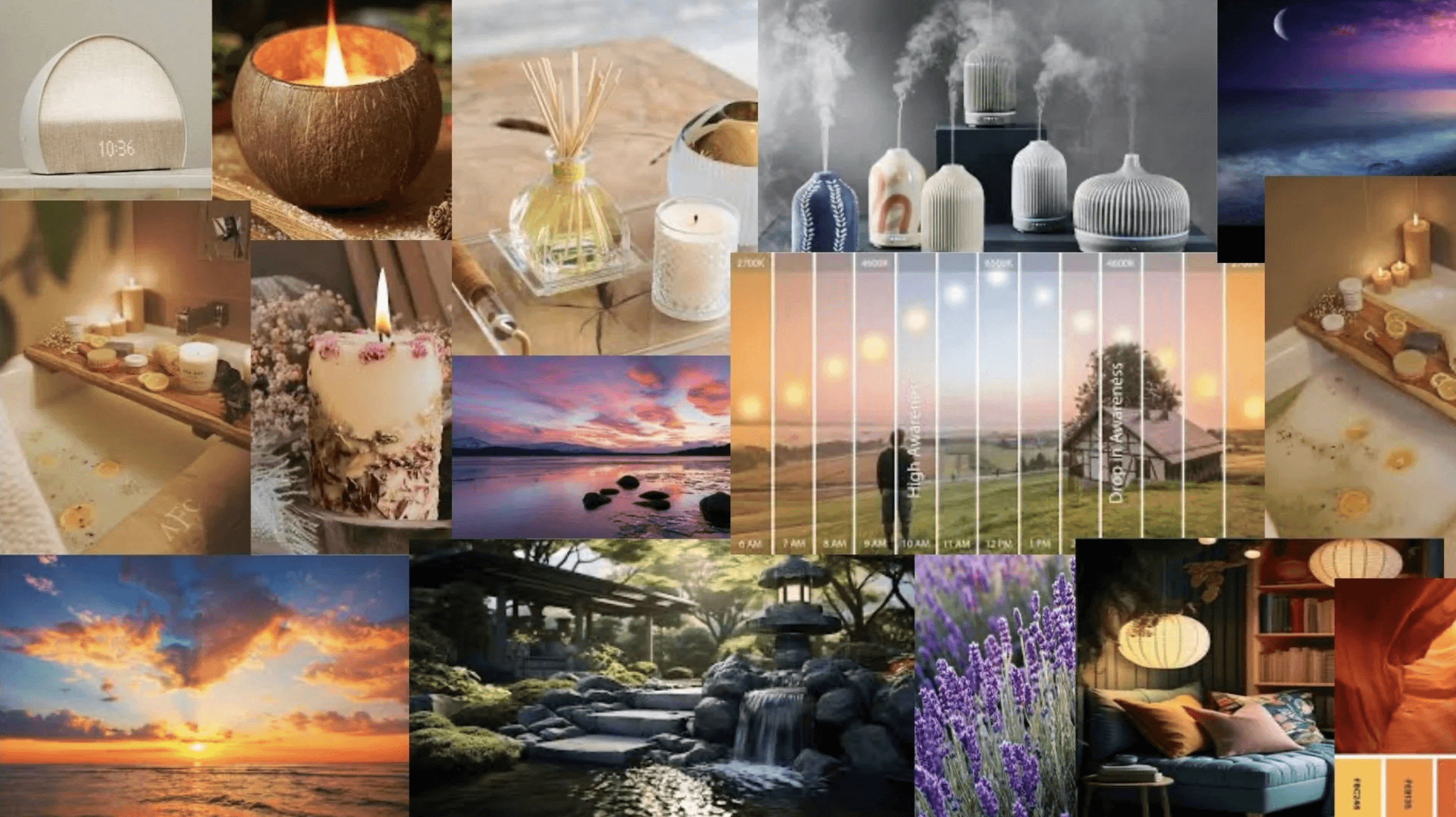
I created this mood board based off of what well-being feels to me to draw color inspiration. By doing this, I was able to get a better idea for how I wanted to app and lamp to feel.
For the colors, I decided to draw inspiration from my mood board. Initially I started with a darker blue background but then when I started implementing elements of my lamp, I didn’t like how the colors clashed. I knew I wanted the app interface to be soft and nothing too bright, so I decided to go back to the drawing board.
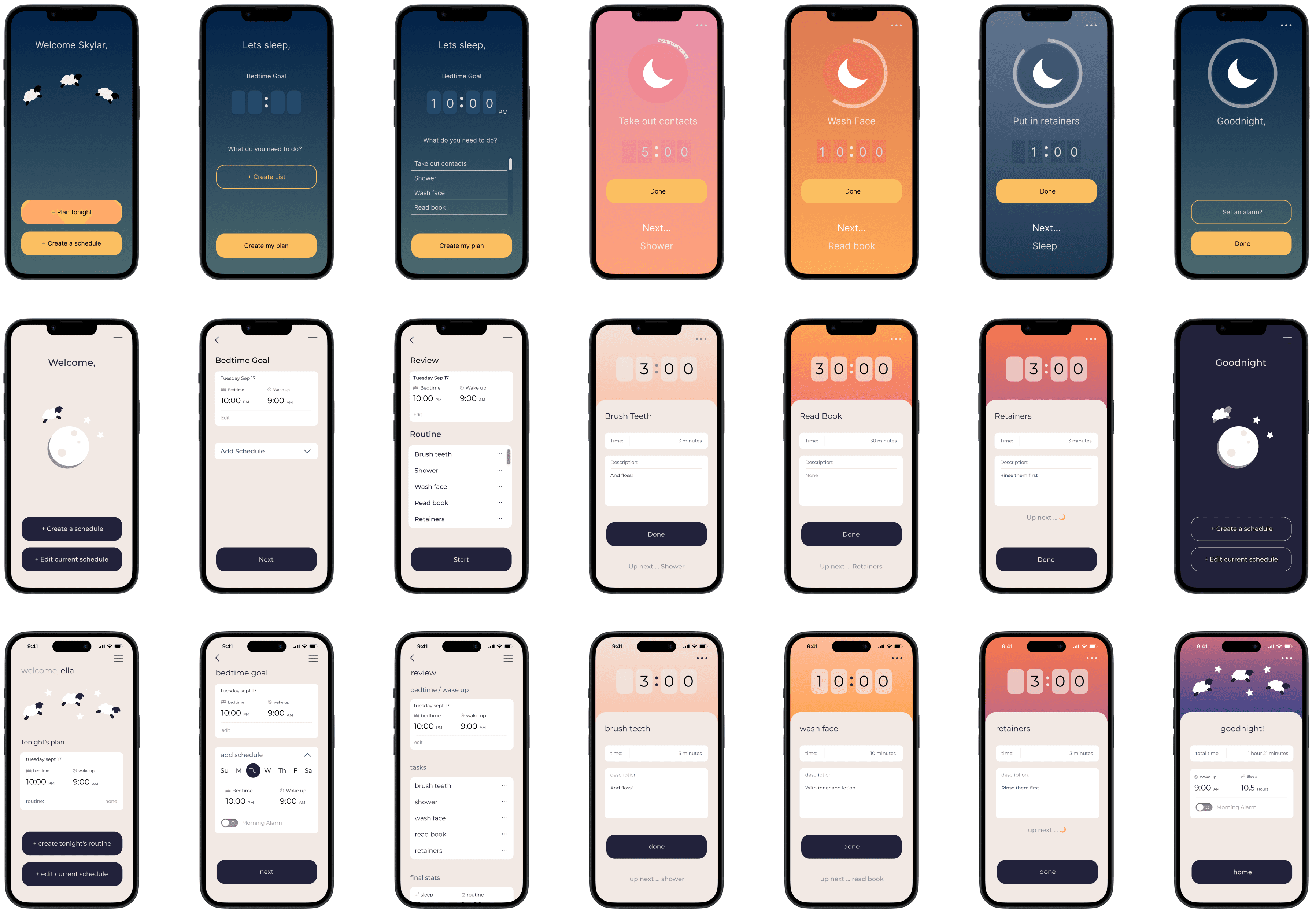
Below you will see the progression of my designs. Each row being improved by the next.
I created this mood board based off of what well-being feels to me to draw color inspiration. By doing this, I was able to get a better idea for how I wanted to app and lamp to feel.
I created this mood board based off of what well-being feels to me to draw color inspiration. By doing this, I was able to get a better idea for how I wanted to app and lamp to feel.
For the colors, I decided to draw inspiration from my mood board. Initially I started with a darker blue background but then when I started implementing elements of my lamp, I didn’t like how the colors clashed. I knew I wanted the app interface to be soft and nothing too bright, so I decided to go back to the drawing board.
Below you will see the progression of my designs. Each row being improved by the next.
For the colors, I decided to draw inspiration from my mood board. Initially I started with a darker blue background but then when I started implementing elements of my lamp, I didn’t like how the colors clashed. I knew I wanted the app interface to be soft and nothing too bright, so I decided to go back to the drawing board.
Below you will see the progression of my designs. Each row being improved by the next.
Outcome
Outcome
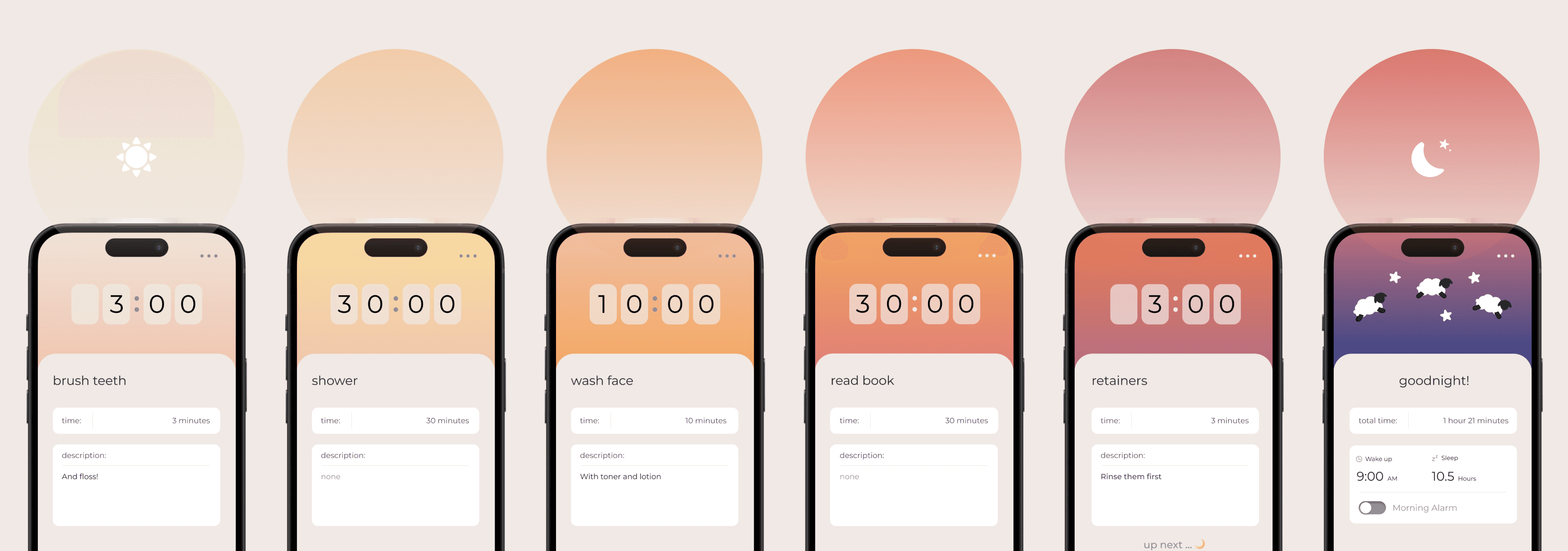
Sleep plays a very important role on peoples lives, and with Luna users can get the most out of their nights. The app allows users to create and set bedtime and routines, then when bedtime comes around and they are going through their tasks, the lamp will slowly change colors with each task from a bright yellow to a darker red as bedtime approaches.
Sleep plays a very important role on peoples lives, and with Luna users can get the most out of their nights. The app allows users to create and set bedtime and routines, then when bedtime comes around and they are going through their tasks, the lamp will slowly change colors with each task from a bright yellow to a darker red as bedtime approaches.
Experience in Action
Experience in Action
Key Features
Key Features
The final feature set was shaped directly by insights from early research, focusing on creating a smooth calming experience designed to improve users sleep.
The final feature set was shaped directly by insights from early research, focusing on creating a smooth calming experience designed to improve users sleep.
Playful yet calming
Playful yet calming
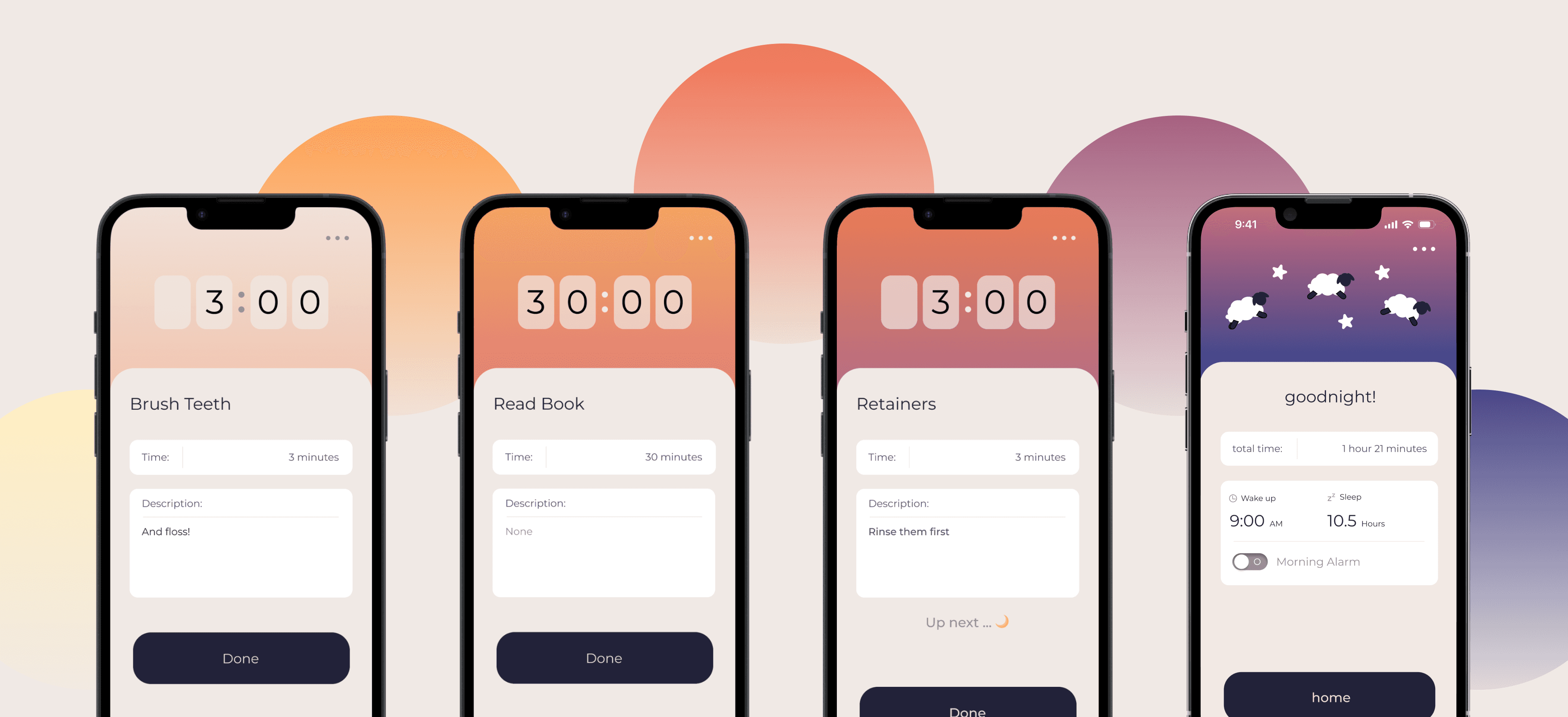
The playful look of both the lamp and app interface gives it a very calming feel with its pastel colors and round edges. I also decided to keep all text in the app lowercase to give it a quieter feel since users will primarily be using the app before bedtime.
The playful look of both the lamp and app interface gives it a very calming feel with its pastel colors and round edges. I also decided to keep all text in the app lowercase to give it a quieter feel since users will primarily be using the app before bedtime.
Goals set by you
Goals set by you
User are able to set their goals when it comes to how many hours they want to sleep each night. However, we are aware that things can be unpredictable so when you snooze tasks or change you start time, you total sleep time is edited as well.
User are able to set their goals when it comes to how many hours they want to sleep each night. However, we are aware that things can be unpredictable so when you snooze tasks or change you start time, you total sleep time is edited as well.
Consistency is key
Consistency is key
Users have the option to reuse bedtime schedules from previous days or set up a repeating weekly schedule. But, not everything always goes to plan, so users are able to make quick edits before starting their routines.
Users have the option to reuse bedtime schedules from previous days or set up a repeating weekly schedule. But, not everything always goes to plan, so users are able to make quick edits before starting their routines.
Product Summary
Product Summary
Luna is an app designed to help users get better sleep. By combining the benefits of a daily bedtime routine and circadian lighting, Luna will leave all users ready for bed. The app allows you to set bedtimes, created schedules, and set alarms either right before bed or in advance.
Luna is an app designed to help users get better sleep. By combining the benefits of a daily bedtime routine and circadian lighting, Luna will leave all users ready for bed. The app allows you to set bedtimes, created schedules, and set alarms either right before bed or in advance.
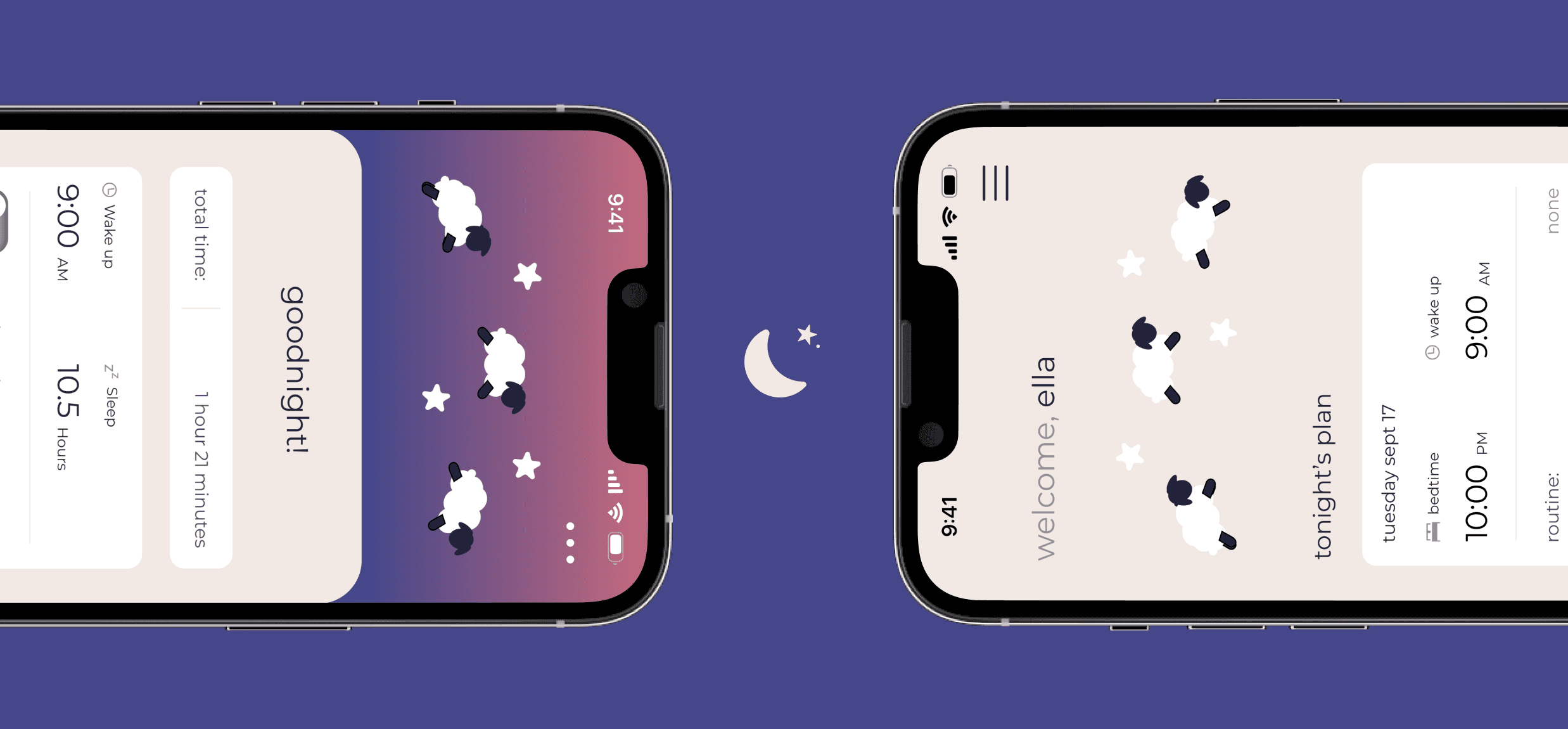
Luna allows users to set a desired bedtime and build a personalized wind-down routine either in advance or as they go. Once the routine is started, the app calculates and communicates when the user should begin in order to meet their target amount of sleep. Users then move through their tasks step by step while their connected lamp gradually shifts from a bright, soft white to a dim, warm red, reinforcing each stage of the wind-down process. By the time the routine is complete, the environment has been subtly adjusted to support a calm transition into sleep.
Luna allows users to set a desired bedtime and build a personalized wind-down routine either in advance or as they go. Once the routine is started, the app calculates and communicates when the user should begin in order to meet their target amount of sleep. Users then move through their tasks step by step while their connected lamp gradually shifts from a bright, soft white to a dim, warm red, reinforcing each stage of the wind-down process. By the time the routine is complete, the environment has been subtly adjusted to support a calm transition into sleep.
Next Steps
Next Steps
After a couple of weeks working on this project, I found real value in exploring the intersection between digital and physical design, and how the two can work together to support a shared goal. Researching and prototyping this relationship was especially engaging, and building the lamp itself was a highlight, it was refreshing to step away from the screen and work hands-on again. While I faced some challenges with shaping the base and wiring, the process of iterating through trial and error made the final result feel even more rewarding.
Overall, I’m proud of where this project landed, and my next step would be to continue developing the experience by introducing more refined animations and richer interaction design within the app when time allows.
Although there was extensive iteration and evolution during the beginning stages of production, we were able to get more feedback at the showcase. With this feedback, there were a few things I would like to go back and work on in my free time. I would like to go back and work on transitions and animations between screens to make the experience flow a bit better. I would also like to explore other ways to get younger household members invloved, whether this be with games or other challenges.
Overall I am very happy with how this product turned out. It was exciting starting out with nothing but a problem and then taking it all the way to a working product showcase.